How Did Earth Get Its Atmosphere? The Story of Our Planet’s First Air

universe

How Did Earth Get Its Atmosphere? The Story of Our Planet’s First Air Earth’s atmosphere seems like a permanent part of the planet, but it was not there in its present form when Earth formed about 4.6 billion years ago. The young Earth was extremely hot, and the gases surrounding it were very different from […]

How Did Earth Get Its Atmosphere? The Story of Our Planet’s First Air Read Post »
How Did the Moon Form? The Giant Impact Theory Explained

universe

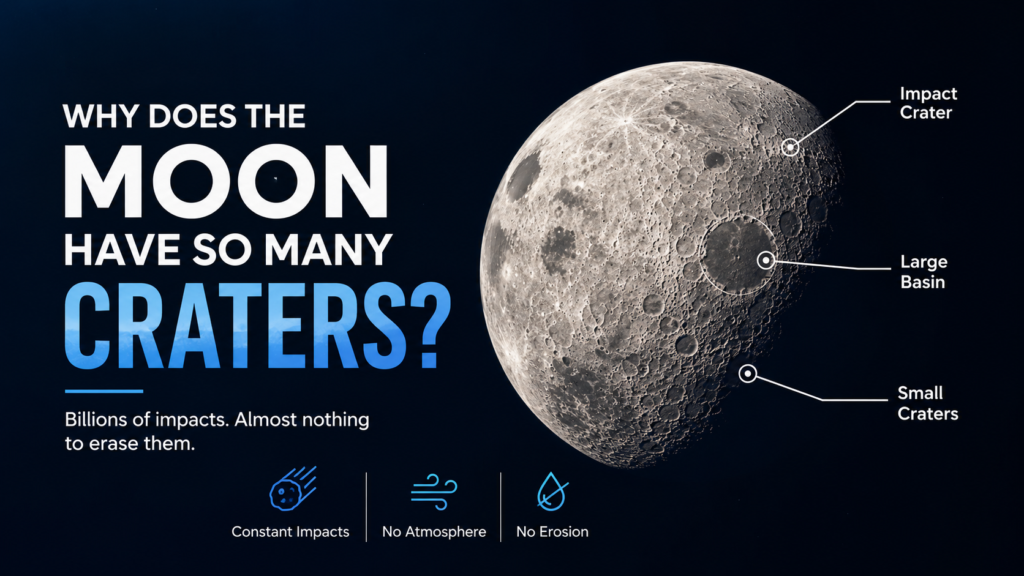
Earth’s Moon is unusually large compared with its planet. For decades, scientists have tried to understand how this close companion formed about 4.5 billion years ago. Several ideas have been proposed, but the giant impact hypothesis is now the leading explanation. It suggests that the young Earth experienced a massive collision, and material thrown into

How Did the Moon Form? The Giant Impact Theory Explained Read Post »

How Did Earth Form? A Step-by-Step Look at Earth’s Formation

universe

Earth formed about 4.5 billion years ago from material left over from the formation of the young Solar System. Dust and rock around the young Sun gradually collided, stuck together, and grew into larger bodies. Over millions of years, these bodies merged through accretion—the gradual buildup of a planet by collecting more material. Eventually, one

How Did Earth Form? A Step-by-Step Look at Earth’s Formation Read Post »

How Was the Milky Way Formed? From Early Stars to the Galaxy We See Today

universe

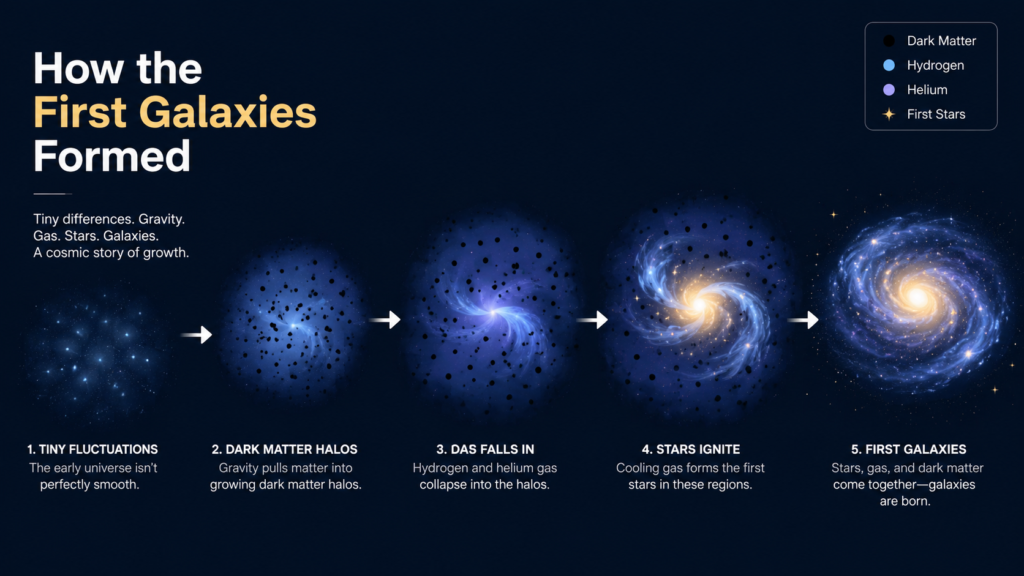
We see the Milky Way as a broad band of stars across the night sky, but the galaxy itself was not created in one event. The Milky Way formed gradually as gravity brought matter together, gas collected, stars formed, and smaller galactic systems merged over billions of years. Its earliest building blocks appeared more than

How Was the Milky Way Formed? From Early Stars to the Galaxy We See Today Read Post »

How Do Scientists Know Dark Energy Exists?

universe

The universe is expanding, but scientists discovered that its expansion is not slowing down. It is accelerating. So how do scientists know dark energy exists if they cannot see it? The answer comes from measuring how the universe has expanded over time. Distant supernovae, observations of the cosmic microwave background, and measurements of large-scale cosmic

How Do Scientists Know Dark Energy Exists? Read Post »

Scroll to Top